Category: Safety

  • Control of Hazardous Energy Program

    Control of Hazardous Energy Program

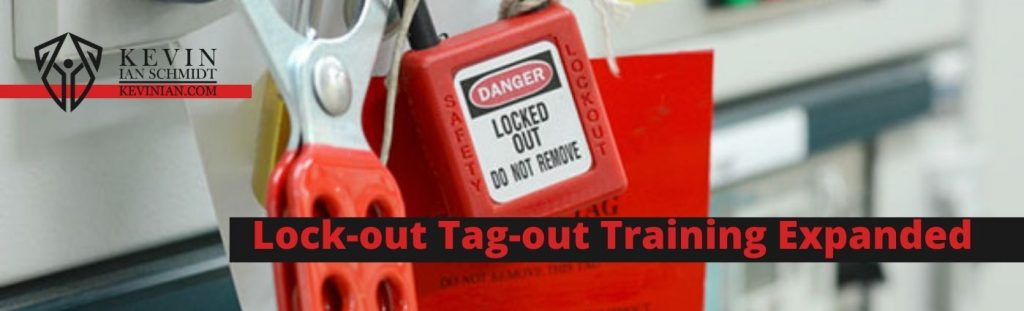
    A control of hazardous energy program is very important for workplace safety, and is often overlooked in many workplaces. Many workplaces think they are exempt from the OSHA standards of controlling hazardous energy.

    Control of Hazardous Energy, often just called Lockout/Tagout (LOTO), is the #5 most common cited OSHA violation.

    While often misunderstood, or misapplied, OSHA 1910.147 spells out the applicability of the standard, along with the steps to perform LOTO.

    The foundation of a Hazardous Energy Control Program is a policy that explains all aspects of the program, sets expectations of when LOTO is performed, and by whom.

    Besides a policy there are other important components of a LOTO program, which includes:
    • Training – for those performing Lockout/Tagout
    • Training – for “affected employees”; defined as employees in a work area where LOTO is performed, who may be impacted by the action
    • Annual retraining – Lockout/Tagout is not a set and forget program, it needs to include annual recertification for employees
    • Machine specific procedures – these are documented procedures to perform Lockout/Tagout for each piece of equipment, and needs to be reviewed at minimum annually.

    Do you need more components of a lockout/tagout program?

    Besides the above components, the policy, training,machine specific procedures, and recertifications need to be performed every time a new piece of equipment is added to the workplace.

    To learn more about OSHA 1910.147 Control of Hazardous Energy Standards, OSHA has a published booklet, which helps explain the concepts of the standard, but should not be used to as a substitue for the standard in it’s applicability to workplace safety. View the booklet here.

    If you need to sell the concept of Lockout/Tagout to your superiors, as it does require a substantial investment in time, new safety equipment, and enforcement, CDC/NIOSH has a fact sheet that can be used to explain the standard and it’s importance for workplace safety. View the fact sheet here.

    Failure to have a Lockout/Tagout policy, or even a suitable program, can lead to employee injury or death, and is a direct violation of the OSHA General Duty Clause:

    a) Each employer —

    (1) shall furnish to each of his employees employment and a place of employment which are free from recognized hazards that are causing or are likely to cause death or serious physical harm to his employees;

    (2) shall comply with occupational safety and health standards promulgated under this Act.

    (b) Each employee shall comply with occupational safety and health standards and all rules, regulations, and orders issued pursuant to this Act which are applicable to his own actions and conduct.

    I offer 2 policies for Control of Hazardous Energy:

    1. Is a basic program, which spells out the base minimum of an OSHA compliant program, good for a workplace with minimal need for LOTO, such as one where contractors perform all the work.
    2. Is an advanced policy, in which every component of a quality program is spelled out, including Tagout only, lock removal, and discipline for policy violation.

    View the basic Control of Hazardous Energy Program below:

    Download the basic Control of Hazardous Energy Program below:


    View the advanced Control of Hazardous Energy Program below:

    Download the advanced Control of Hazardous Energy Program below:

  • Control of Hazardous Energy Procedures and Policy

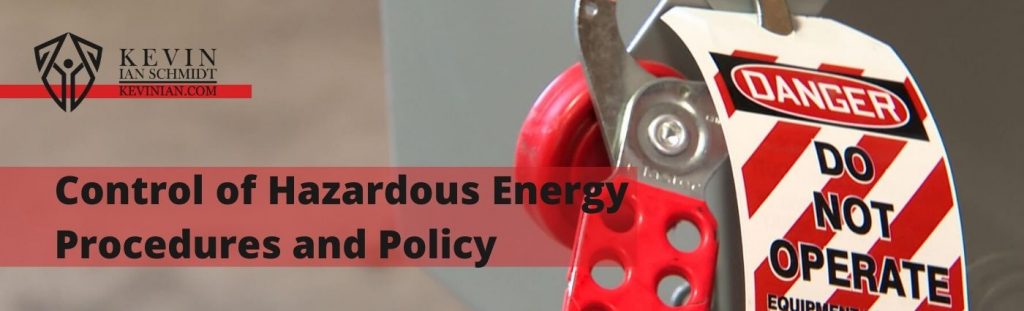
    Control of Hazardous Energy Procedures and Policy

    There is no national data available on the number of workers killed each year by contact with uncontrolled hazardous energy. However, during the period between 1982 through 1997, the National Institute for Occupational Health (NIOSH) investigated 1281 fatal accidents as a part of its Fatality Assessment and Control Evaluation Program, (FACE). The FACE program was only active in 20 states during that period so the statistics represent just a portion of American workers. The findings, for this portion of workers, showed that 152 fatalities involved the installation, maintenance, service or repair tasks on or near machines, equipment, processes, or systems.

    OSHA estimates that 29 CFR 1910.147 protects approximately 39 million workers and adhering to its requirements can eliminate nearly 2% of all workplace deaths in areas affected by this rule.

    Basic steps of the control of hazardous energy procedure:

    – Preparation for shutdown
    – Notifying all employees
    – Equipment shutdown
    – Isolation from hazardous energy
    – Render all stored or residual energy safe.
    – Locking & Tagging the machines
    – Performing maintenance or service activity
    – Verification (observation, visual inspection & equipment testing)
    – Removing Locks & Tags
    – Notifying all employees to resume work

    Testing or Repositioning of the Machines During Special Circumstances

    OSHA allows the temporary removal of locks or tags only under special circumstances such as when:

    • The machines need to be tested or repositioned.

    If power is needed to test the machines or reposition the machines, equipment or components, re-energization must follow a specific procedure.

    • When outside contractors are working on-site.

    Both the onsite and off-site employers must communicate about their respective lockout and tagout procedures. Each must be certain that its personnel understand and comply with all restrictions and/or prohibitions of the other employer’s energy control program.

    • When servicing or maintenance is carried out by a group rather than one person.

    The crew or group must follow a procedure that affords all employees a level of protection that is equal to that provided by the lockout/tagout device.

    • When there are shift or personnel changes during servicing or maintenance.

    Either the energy isolating devices must remain under continuous control or the on-coming shift must verify the de-energization and lockout/tagout devices are in place on machinery and equipment.

    Removal of Tags or Lockout Devices for Testing or Positioning of the Machines

    When lockout devices or tags are removed and energy is restored to the machines or equipment for testing or repositioning, authorized employees must take these actions:

    • Check the work area to ensure that all non-essential items are removed and the machines are intact and capable of operation.
    • Check the area around the machinery to be certain all employees have been removed or are in safe positions.
    • Locks and tags are to be removed only by the employees who attached them when possible.
    • Notify all employees before restarting machinery.
    • Energize and reposition machinery.
    • De-energize all systems; isolate the machinery from the energy source.
    • Reapply lockout or tagout devices as specified.

    Removal of Locks and Tags

    1. Inspect the work area to ensure that non-essential items have been removed and that machine or equipment components are intact and operate properly.
    2. Check the area around the machine or equipment to ensure that all employees have been safely positioned or removed from the area.
    3. Make sure that locks or tags are removed only by employees who attached them. When this is not possible, the device may be removed under the direction of the employer, provided he adheres to the specific procedures in the standard.
    4. Notify affected employees after removing locks or tags and before starting equipment or machines.

    These policies must be closely followed – with no deviation. Inconsistency creates confusion and can lead to injury and even death.

    Check out this process for removing abandoned lockout locks

    What is Lock Out – Tag out (LOTO)

    LOTO is a safety procedure followed to declare the industrial machines safe. The machines shall be incapable of starting again without the prior knowledge of all the people involved.

    Lock Out – It means locking the concerned device and keeping it away from any power-inducing source. The machine should not be capable of restarting again without warning.

    This involves locking devices like:

    • Circuit breakers
    • Cable lockouts
    • Valves & springs
    • Disconnect switches
    • Key combinations
    • Pneumatic lockouts

    Tag Out – This refers to a process of labeling the device as powerless. The attached pointer includes: why the tag is there, time of application of the tag, & name of the authorized person.

    All LOTO devices must have some standard functions and should meet the following requirements.

    • Identifying the authorized person
    • High durability level
    • A “Do not open, start” warning
    • Uniform in color, size, print, shape and format
    • Devices should resist early removal, except using specific tools like bolt cutters, wire cutters etc.
    • Non-releasable tags

    Do you need more components of a lockout/tagout program?

    There are three important definitions that are to be kept in mind while following these steps:

    System – This refers to the machinery, process and equipment.

    Authorized Employee – This refers to the person who’s qualified to carry out the lockout process.

    Affected Employee – These employees work in the machines. They are not qualified to carry out the procedure like workers, housekeeping staff, ground staff etc.

    Make sure you have the proper training for your employees:
    Basic Lockout/tagout Training
    Expanded Lockout Tagout Training

    There are several responsible people for the job to take place smoothly.

    The managers are responsible for drafting & updating. Monitoring the job is their primary aim.

    The supervisors are responsible for ensuring that everyone follows protocols.

    The employees are responsible for assisting and reporting issues if/when they occur.

    View the Controlling Hazardous Energy Program below

    Download the Controlling Hazardous Energy Program below

  • Who and Where does OSHA Regulate?

    Who and Where does OSHA Regulate?

    OSHA standards are:

    • rules that describe the methods employers must use to protect employees from hazards
    • designed to protect workers from a wide range of hazards

    OSHA writes standards (also called “rules”) for four industrial groups: general industry, construction, maritime, and agriculture. Where there are no specific standards, employers must comply with the General Duty Clause of the OSH Act.

    OSHA issues standards for a wide variety of workplace hazards, including:

    • toxic substances
    • electrical hazards
    • fall hazards
    • hazardous waste
    • machine hazards
    • infectious diseases
    • fire and explosion hazards
    • dangerous atmospheres

    OSHA standards appear in the Code of Federal Regulations (CFR). The OSHA standards are broken down into Parts:

    • Part 1910 is known as the General Industry Standards; Some of the types of industries covered by the General Industry standards are manufacturing, the service sector, and health care
    • Part 1926 covers the Construction industry
    • Parts 1915, 1917 and 1918 are Maritime Industry standards
    Learn about the OSHA Inspection process used to apply the standards here

    Most Frequently Cited OSHA Standards

    Through the years, the same standards seem to be most frequently cited by OSHA. Their position on the list below varies from year to year, but they’re all on the TOP 10 list each year. Visit OSHA’s website on this topic. Just click on the image.

    Notice the Fall Protection and Hazard Communication standards: these two standards are usually is at or near the top, so make sure you have an effective hazard communication program. Actually, it’s smart safety management to give priority to each of the top 10 in your safety program.


    OSHA Coverage

    The OSH Act covers most private sector employers and their workers, in addition to some public sector employers and workers in the 50 states and certain territories and jurisdictions under federal authority. Those jurisdictions include the District of Columbia, Puerto Rico, the Virgin Islands, American Samoa, Guam, Northern Mariana Islands, Wake Island, Johnston Island, and the Outer Continental Shelf Lands.

    Private Sector Workers

    OSHA covers most private sector employers and workers in all 50 states, the District of Columbia, and other U.S. jurisdictions either directly through Federal OSHA or through an OSHA-approved state plan.

    State Plans

    State plans are OSHA-approved job safety and health programs operated by individual states instead of Federal OSHA. The OSH Act encourages states to develop and operate their own job safety and health programs and precludes state enforcement of OSHA standards unless the state has an approved program. OSHA approves and monitors all state plans and provides as much as fifty percent of the funding for each program. State-run safety and health programs must be at least as effective as the Federal OSHA program.

    To find the contact information for the OSHA Federal or state plan office nearest you, call 1-800-321-OSHA (6742) or go to www.osha.gov.


  • Hand and Power Tool Safety Plan

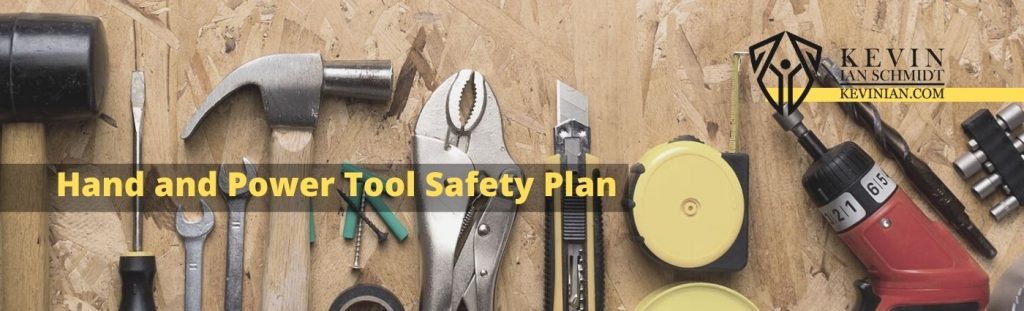
    Hand and Power Tool Safety Plan

    Employees who use hand and power tools and who are exposed to the hazards of falling, flying, abrasive and splashing objects, or exposed to harmful dusts, fumes, mists, vapors, or gases must be provided with the particular personal equipment necessary to protect them from the hazard.

    All hazards involved in the use of power tools can be prevented by following five basic safety rules:

    1. Keep all tools in good condition with regular maintenance.
    2. Use the right tool for the job.
    3. Examine each tool for damage before use.
    4. Operate according to the manufacturer’s instructions.
    5. Provide and use the proper protective equipment.

    Hand and Power Tool Safety Guidelines

    Power Tools

    Power tools can be hazardous when improperly used. There are several types of power tools, based on the power source they use: electric, pneumatic, liquid fuel, hydraulic, and powder-actuated.

    Employees should be trained in the use of all tools – not just power tools. They should understand the potential hazards as well as the safety precautions to prevent those hazards from occurring.

    The following general precautions should be observed by power tool users:

    • Never carry a tool by the cord or hose.
    • Never yank the cord or the hose to disconnect it from the receptacle.
    • Keep cords and hoses away from heat, oil, and sharp edges.
    • Disconnect tools when not in use, before servicing, and when changing accessories such as blades, bits and cutters.
    • All observers should be kept at a safe distance away from the work area.
    • Secure work with clamps or a vise, freeing both hands to operate the tool.
    • Avoid accidental starting. The worker should not hold a finger on the switch button while carrying a plugged-in tool.
    • Tools should be maintained with care. They should be kept sharp and clean for the best performance. Follow instructions in the user’s manual for lubricating and changing accessories.
    • Be sure to keep good footing and maintain good balance.
    • The proper apparel should be worn. Loose clothing and jewelry can become caught in moving parts.
    • All portable electric tools that are damaged shall be removed from use and tagged “Do Not Use.”

    Under 29 Code of Federal Regulation (CFR), 1910.242(a) employers are required to keep all tools in good repair. It states, “Each employer shall be responsible for the safe condition of tools and equipment used by employees, including tools and equipment which may be furnished by employees.”

    Power tools present more hazards than hand tools due to the speed at which they operate and the potential for the user to come into contact with the power source (electrical, pneumatic , hydraulic etc.). There are differences between the PPE suggested for use with hand tools and the PPE suggested for safe power tool use.

    Check out the Toolbox Talks for Maintenance and Mechanics that I have published

    Hand Tools

    Hand tools are non-powered. They include anything from axes to wrenches. The greatest hazards posed by hand tools result from misuse and improper maintenance.  Some examples:

    • The employer is responsible for the safe condition of tools and equipment used by employees but the employees have the responsibility for properly using and maintaining tools.
    • Employers should caution employees that knives, saw blades, or other tools be directed away from aisle areas and other employees working in close proximity. Knives and scissors must be sharp. Dull tools can be more hazardous than sharp ones.
    • Appropriate personal protective equipment, e.g., safety goggles, gloves, etc., should be worn due to hazards that may be encountered while using portable power tools and hand tools.
    • Safety requires that floors be kept as clean and dry as possible to prevent accidental slips with or around dangerous hand tools.
    • Around flammable substances, sparks produced by iron and steel hand tools can be a dangerous ignition source. Where this hazard exists, spark-resistant tools made from brass, plastic, aluminum, or wood will provide for safety.
    Check Out: How to Conduct a Job Hazard Analysis

    Download the Hand & Power Tool Safety Plan


    Read the Hand & Power Tool Safety Plan

  • Sample Accident Investigation Policy

    Sample Accident Investigation Policy

    Workplace accidents cost companies approx $1 billion weekly in direct worker’s compensation costs, with an estimated $3 billion weekly in indirect costs! A quality accident investigation program can reduce workplace injuries by properly identifying hazards that have caused an injury, and taking appropriate actions to eliminate those workplace hazards.


    So what does OSHA say about accident investigations:

    “OSHA strongly encourages employers to investigate all incidents in which a worker was hurt, as well as close calls (sometimes called “near misses”), in which a worker might have been hurt if the circumstances had been slightly different.”

    So what does this mean for employers? While an investigation is not required by OSHA, and not having a policy or procedure will not result in an OSHA fine, an injury can identify a known workplace hazard. Known workplace hazards that are not abated can expose a company to a fine under OSHA’s General Duty Clause:

    a) Each employer —

    1) shall furnish to each of his employees employment and a place of employment which are free from recognized hazards that are causing or are likely to cause death or serious physical harm to his employees;

    Not conducting an investigation after an accident, might not identify the hazard, which OSHA would expect you to abate if it causes an injury to an employee.

    Sound like a catch-22? It can be for employers.

    Which is why implementing a policy for properly investigating workplace safety incidents can be so important.

    Below is an excerpt from the Sample Accident Investigation Program, read and download the entire policy below:

    The Power of Accident Investigation Programs

    Accidents don’t happen in a vacuum. They are stories waiting to be told, revealing hidden vulnerabilities and missed opportunities for improvement. Enter the Accident Investigation Program, a powerful tool that transforms mishaps into stepping stones for progress. This management system isn’t about pointing fingers; it’s about dissecting incidents with a microscope, uncovering the “why” behind the “what.”

    Think of an accident investigation program as a safety detective agency. Its skilled investigators meticulously analyze accidents and injuries, identifying contributing factors like dominoes in a chain reaction. By eliminating these factors, we prevent the dominoes from toppling again, creating a safer environment for everyone.

    But the benefits of an accident investigation program go beyond the immediate incident. It’s a catalyst for broader progress:

    • Sharper Focus: Like a lighthouse in the fog, an accident investigation process shines a light on underlying inefficiencies and quality gaps. By understanding how accidents happen, we can address systemic issues and improve overall operations.
    • Foresight with Hindsight: Trends in accident data become whispers of future risks. A good policy listens carefully, analyzing patterns and emerging threats to proactively prevent similar incidents before they occur.
    • Empowered Supervision: An accident investigation process equips supervisors with the knowledge and tools to become champions of safety. By understanding accident causes, they can tailor their approach, implement preventive measures, and foster a culture of safety-first awareness.
    • Accountability and Transparency: An quality accident investigation doesn’t shy away from hard truths. It serves as an independent eye, monitoring the effectiveness of safety programs and ensuring compliance with regulations.
    • Informed Decisions: Accidents shouldn’t be swept under the rug. An accident investigation program provides valuable data for handling worker’s compensation claims, reporting to regulatory bodies, and maintaining accurate records – all crucial for informed decision-making.

    An Accident Investigation Program isn’t just a box to tick; it’s a journey towards a safer, more efficient future. By embracing its power, we unlock the potential to learn from our past and build a brighter, safer tomorrow.


    So check out the following:


    Download the Sample Accident Investigation Policy below

    View the Sample Accident Investigation Policy below

  • Incident Investigation Training – Beginners

    Incident Investigation Training – Beginners

    Part of a quality incident investigation program is properly training for those tasked with investigating after an accident.

    This training is geared for beginners, to get a foundation in incident investigation techniques. As skills grow I have  more advanced  investigation trainings available.

    properly investigate all accidents and incidentsThis training covers fundamentals of incident investigation such as:

    • the importance of root cause analysis in an investigation;
    • the hierarchy of controls to minimize risk exposure;
    • how to identify “Red Flags” in an investigation.
    Check Out: Incident Report Writing Guide

    Benefits of Incident Investigations

    When properly conducted, incident investigations:

    • help prevent future accidents,
    • help you identify and eliminate hazards,
    • expose deficiencies in your processes or equipment,
    • reduce injury and workers compensation costs, and
    • maintain and improve employee morale.

    This training can be given to those in your company tasked with conducting an incident investigation, either in a class room environment or as part of a self learning exercise.

    Learning Outcomes from Incident Investigation training

    • Broad understanding of incident investigation
    • Robust understanding of incident investigation
    • Readily applicable incident investigation procedures
    • Be able to collect, analyze and communicate data
    • Understanding of strategies to ensure the organization learns from safety failure
    Check Out: The Challenge of Employees to Report All Safety Incidents

    Who can benefit from this incident investigation training?

    Managers and supervisors who are responsible for conducting incident investigations will most benefit from this course. The content is also beneficial to workers who have health & safety responsibilities, such as Health & Safety Representatives and First Responders.

    Check out the following related program components available for free:

    Download the Incident Investigation Training for Beginners

    View the Incident Investigation Training for Beginners


  • Root Cause Worksheet

    Root Cause Worksheet

    Conducting a full and proper root cause analysis is important to completing an accident investigation. This worksheet will aid in a full root cause analysis.

    Including this form in your accident investigation toolkit, will aid those conducting an investigation after a safety incident.


    Using the Root Cause Investigation Worksheet

    Example Accident: “An employee comes into the lobby, with uncovered marble flooring during a rain storm, and slips on water puddled near door; spraining their wrist.”

    Even if this specific accident didn’t result in a serious injury, they can result in broken bones or head injuries. No matter the level of injury, each accident should be investigated equally to prevent future accidents that may result in a more serious injury.

    Using the root cause worksheet, you read the environmental section and see multiple applicable items.


    So, applying this to the above example, you can identify:

    • adverse weather: raining outside;
    • walking/working surface: uncovered marble floor;
    • poor housekeeping: water puddled at entrance on floor;

    as causes of this instance. So which is a root cause and which is a causal factor of the incident? You can find that by applying some simple questions:

    • If it were raining outside, and the floor was covered with an anti-slip rug, would this have occurred?
    • If housekeeping had cleaned up the water pooled, would the person have slipped?
    • If there was no puddled water, but the person’s shoes were slick with rain could they have slipped on the marble floor?

    Applying those questions, you will realize that the adverse weather and the poor housekeeping were contributing factors, while the walking/working surface was the root cause. Because a simple anti-slip rug could have stopped this, even if there wasn’t a puddle and it was raining outside, or if there was a puddle and it wasn’t raining outside.


    If you follow through with this root cause analysis, and take action and place an anti-slip mat at the lobby entrance, you have negated the possibility for further accidents.

    You can see how this root cause worksheet is a good tool to have as part of an accident investigation program.

    Ensure you give your team the tools and training required to fully implement a quality accident investigation program, which includes ensuring they are aware of their roles in the program, that they have been trained on their responsibilities, and they know how to follow-up to create change.

    I have also published a book for Root Cause Analysis, available in softcover and hardcover.

    Check out my book on Amazon.


    Check out the following related program components available for free:


    View the Root Cause Worksheet here

    Download the Root Cause Worksheet here

  • The 5 Why Method of Root Cause Analysis

    The 5 Why Method of Root Cause Analysis

    root cause 5 why trainingKnowing how to properly conduct a 5 why root cause analysis is imperative when handling a safety incident investigation.

    It isn’t just OSHA that encourages the use of root cause during an incident investigation, but also the EPA under their Risk Management Program(RMP).

    Concerning Root Cause Analysis OSHA says:

    During an incident investigation, an employer must determine which factors contributed to the incident, and both OSHA and the EPA encourage employers to go beyond the minimum investigation required and conduct a root cause analysis. A root cause analysis allows an employer to discover the underlying or systemic, rather than the generalized or immediate, causes of an incident. Correcting only an immediate cause may eliminate a symptom of a problem, but not the problem itself. – Source
    While this is not an official order to conduct a root cause analysis, and it may not result in an OSHA fine for not complying, it can potentially result in a violation of OSHA’s General Duty Clause:

    a) Each employer —

    (1) shall furnish to each of his employees employment and a place of employment which are free from recognized hazards that are causing or are likely to cause death or serious physical harm to his employees;
    That is because the occurrence of a safety incident is a clear indication of a workplace hazard, and a failure to abate this hazard potentially means your company is no longer furnishing employees with a workplace with recognized hazards, as a full and proper root cause investigation would have uncovered the direct cause of this hazard.
    So while OSHA doesn’t require it, they may cite you over not investigating properly. Anyone with an understanding of OSHA rules, regulations, and interpretations, will understand this is often the case, as OSHA will always err on the site of caution for employee protection.
    Check Out: How to Improve Your Safety Culture

    The 5 Why Method as a Root Cause Analysis Method for Workplace Incidents

    The 5 Whys technique can also be used as a method for determining root causes of workplace incidents. What would 5 Whys look like in the context of a workplace incident investigation? Here’s the application of 5 Whys to an example mentioned in an OSHA fact sheet:

    The Problem: A worker slips and falls, and suffers an injury.
    1st Why: There was a puddle of oil on the plant floor.
    2nd Why: Oil spilled from a compressor.
    3rd Why: An oil leak from the compressor was not detected.
    4th Why: The compressor was not inspected on a regular basis and repaired (if required).
    5th Why and the Root Cause: The compressor was not in the maintenance system.

    In theory it takes five “whys” to get to the root cause, but in practice there will be cases where you may use more or fewer than five “whys”.

    This 5 Why Method Training will explain the basics of how to conduct a root cause analysis using the 5 Why method.
    Adding a 5 Why Method training to your company’s incident investigation training program will improve your accident investigations to best identify hazards in the workplace along with empowering your employees in owning their safety.

    Finally, according to the Washington State Department of Labor & Industries, these are the benefits of asking the 5 Whys:

    • Simplicity: Easy to use and requires no advanced mathematics or tools.
    • Effectiveness: Helps to quickly separate symptoms from causes and identify the root cause.
    • Comprehensiveness: Helps to determine relationships between various problem causes.
    • Flexibility: Works well alone and when combined with other methods.
    • Engaging: Fosters teamwork.
    • Inexpensive: A guided, team-focused exercise with no additional costs.

    Combining this training with the Root Cause Worksheet as part of your total incident investigation program will allow your team to thoroughly investigate every incident.
    Please check out the other components of an Incident Investigation Program, listed below:


    To facilitate better root cause analysis in the workplace, I published a Root Cause Analysis workbook available on Amazon.

    Download the 5 Why training

    View the 5 Why training


  • Implementing Employers Rights During An OSHA Inspection

    Implementing Employers Rights During An OSHA Inspection

    For those of you that have had an OSHA inspection at your workplace you probably have learned a thing or two as to how you would handle it if you had the opportunity to do it over. No one is really prepared for that unannounced, page from your receptionist informing you that a representative from the U.S. Department of Labor, division of the Occupational Safety and Health Administration is here to talk with you. They usually, it seems, come at a time when all your other facility operational problems are occurring, break downs, employee absentee concerns, shipment backlogs, you name them. But whatever they are, they all have to be set aside so you can respond to your visitor.

    Your Rights As An Employer.

    As a safety professional, I want to share some brief but very important suggestions as to the best way to handle an OSHA visit. First; understand that although you are governed under the Act, you as an employer do have rights. For this article, I will be discussing rights under the OSH Act which is administered under the Federal guidelines. States which have their own OSHA State Plan may have different employer rights and obligations.

    For more information: Who and Where Does OSHA Regulate

    Pre-inspection Rights

    If as an employer you seek to ensure compliance with any and all applicable OSHA regulations without the fear of an OSHA enforcement inspection or the issuance of a citation for identified regulatory infractions, there is help from OSHA itself.

    • Ask for assistance from OSHA itself. Contact your local Regional, Area Offices. Each OSHA Area Office will have a Compliance Assistance Specialists(CASs)on board. The CAS can answer questions on the phone and are also available for seminars, workshops, and speaking events. There is no need to give your name or establishment’s name. Be prepared and explain the specifics of your concern.
    • Request assistance from the OSHA On-site Consultation program. The OSHA On-site Consultation program is funded by OSHA and administered through its respective state agency or a state university. The consultation program is separate from enforcement and a visit will not result in penalties or citations in the event any regulatory infractions are found. One important note; There is a responsibility on the employers part to fully comply with any and all safety and health concerns identified during the consultation visit.

    OSHA On-Site Rights – Recommended Action

    When that day comes, and you probably won’t be prepared or ready for it, it is important that you understand your rights as an employer. It is important to understand how an OSHA inspection is conducted and more important why the OSHA inspector is at your door. The following outlines the When, Why and How elements of an OSHA visit.

    WHEN will OSHA visit your establishment? To be quite honest with you, due to the number of OSHA Compliance Officers, which at last count was right around 2,043 and considering there is approximately 7 million worksites, your odds of getting inspected are low. Let’s look at OSHA inspection priorities; they are (in order):

    • Imminent danger situations
    • Fatalities and catastrophes
    • Complaints (employee)
    • Referrals (made by other Federal or State Agencies or organizations)
    • Follow-ups (initial inspection identified hazards – citation was issued)
    • Planned or programmed investigations (OSHA initiatives (National Emphasis (NEP) or Local Emphasis (LEP) Programs), Site Specific Targeting Initiative (SST).
    The OSHA General Duty Clause is a catch-all regulation that a workplace can be cited under.


    It is very important to understand that most OSHA visits are unannounced. You will not be given any advanced warning prior to an inspection.

    The very first being “Imminent danger” is fairly rare. Very few imminent danger inspections have been conducted by OSHA. You should be well aware that a fatality or catastrophe inspection will be occurring for obvious reasons.

    The remaining reasons for a visit are usually unknown as to when they may occur.

    WHY are they here today? When that day comes and they are sitting in your waiting area, it is important to exercise your rights as an employer before going any further with the inspection. The following action on your part should take place:

    • Make sure your receptionist or whoever first contact is made with request that the compliance officer waits in the waiting area. Next the highest ranking management official on site should be contacted. DO NOT escort the compliance officer to an office or through the work area.
    • The chosen management representative should ask for the compliance officer’s identification card. This will be a certified U.S. Department of Labor / OSHA ID. Also ask for a business card. You will want to make a copy or write down the ID information.
    • Proceed to question why the compliance officer is at your facility, e.g. reason for the inspection following the “inspection priority” list noted above.

    Note: Very important. If the compliance officer is their based on an employee complaint, they MUST provide you with a copy of the complaint itself. The individual filing the complaint will be removed from your copy.

    • If the reasoning for the visit is acceptable you should then request and inform the compliance officer that you are going to contact the Regional Area Office to verify their status and reason for the visit. Don’t hesitate to do this. It is not play “hard-ball” it is just being sure.
    • Once you have verified the compliance officers visit you should then proceed to an office area so as to conduct the opening conference.
    Learn More: OSHA Requirements for Small Businesses

    How To Conduct Yourself During The OSHA Inspection.

    The OSHA visit consists of three basic inspection elements. They are:

    • Opening Conference
    • Walk-around Survey
    • Closing Conference

    Opening Conference.

    Many believe that the walk-around survey is the most important aspect of the inspection. Although during this procedure, any hazards and potential OSHA regulatory violations may be found, it is my opinion that the most important part of the OSHA visit is the opening conference. It is during this phase that the compliance officer will determine your facilities safety and health culture. It is also the period where you, the employer can establish a leadership role in how and what the compliance officer looks at. Remember, this is your business, you know more about how things are run at your facility then the compliance officer. Take charge, be a leader. Here are some tips as to how to conduct an opening conference:

    • Have all your OSHA required and other safety and health written policy and procedures readily available for review, especially your OSHA required accident and illness records. I recommend that each policy be in its separate three ring binder rather than having one, huge binder which holds all the policies. This separate bound system makes it easy to review.
    • Lead the discussion and inform the compliance officer of all your safety and health activities, e.g;

    * Safety and Health Committees,

    * Recent Safety and Health Training,

    * Seminars Attended,

    * Outside Assistance Used.

    Check Out: Conduct your Own OSHA Mock Audit

    Walk-Around Survey

    Often if the opening conference is handled properly, usually on a “targeted inspection” such as a record keeping inspection visit, the visit will be stopped at that point. No walk-around will be conducted.

    In the event that the inspection needs to proceed here are some tips as to how to conduct yourself during that walk around.

    • If the compliance officer is there on a complaint, take the compliance officer directly to the area(s) noted on the complaint itself. For example; if the complaint stated that a specific piece of equipment is improperly guarded, escort the compliance officer to that piece of equipment.

    NOTE: If the compliance officer observes safety and health issues other than the complaint

    reference while traveling to the area of concern, they can note and issue a citation on those items.

    That is why it is very important to not take the compliance officer on a full plant tour.

    • If the compliance officer takes pictures, you should ask what they were taking a picture of and take one yourself.
    • Ask what the compliance officer is looking for.
    • Ask what the compliance officer is writing down.
    • Never leave the compliance officer un-escorted.

    Closing Conference.

    The closing conference is a discussion as to what the compliance officer found and what possibly was found in violation of any applicable OSHA regulation. During the discussion you will want to;

    • Ask what specific OSHA regulation the infraction noted will be applied to.
    • Give some further explanation as to why the infractions were noted and what has been done in the past to eliminate them.
    • Take immediate action to rectify the infractions noted.

    Although the compliance officer will give you an idea as to what may be cited (issuance of citation) they really do not make that decision. The final decision as to issuing a citation is made by the OSHA Area Director. So you won’t get a final answer during this closing conference period.

    Learn More: OSHA Citations Explained
  • Safety Milestones Since the Triangle Shirtwaist Fire

    Safety Milestones Since the Triangle Shirtwaist Fire

    March 25, 2021, was the 110th Anniversary of the Triangle Shirtwaist Fire – a tragic incident that elevated the workplace safety concerns of garment industry workers and workers in other manufacturing jobs to a point of no return. The Triangle Shirtwaist Fire led to the creation of agencies and multiple reforms dedicated to workplace safety. Some reforms began in the days and months that immediately followed the fire while other reforms took years and decades to appear.
    Oct. 14, 1911: The Founding of the United Association of Casualty Inspectors

    The United Association of Casualty Inspectors was founded as a direct response to the Triangle Shirtwaist Fire. According to ASSE, the organization started with 62 members. In 1914, the Association changed its name to American Society of Safety Engineers, and it still operates under that name to this day.

    As of 2011, the Society states it has 32,000 members who “supervise and consult on safety, health, and environmental issues in industry, insurance, government and education.” ASSE also maintains multiple American National Standards Institute (ANSI) committees and projects. The initiatives of ASSE have helped businesses reduce costs by providing a safer workplace environment which, in turn, helps reduce workplace injuries that lead to downtime, workman’s compensation claims and higher turnover rates.

    1911-1921: Worker’s Compensation Laws Take Off

    New York state passed the first worker’s compensation law in 1910, according to EH.net. While the workman’s compensation model had long been studied by businesses, it did not have the support of Samuel Gompers, president of the American Federation of Labor, or a variety of other members (Department of Labor).

    However, in 1909 the AFL switched channels and began to back the program. At the same time, companies like International Harvester had begun to create their own compensation models and supported laws that would ensure all companies, large and small, were supported. By 1921, 46 jurisdictions in the country had workmen’s compensation laws on the books.

    1934: Voluntary Health Insurance Appears

    A National Institutes of Health document titled “Voluntary Health Insurance on the National Scene: The Program of the Insurance Companies” dated the initial offerings of “experiments with group hospital expense insurance” as launching in 1934, which was right on the heels of the Blue Cross movement originating in 1929 (Blue Cross Blue Shield). At this point in history, group insurance plans could be issued to employers, unions and trustees of a welfare benefit fund.

    1955: The Emergence of the Industrial Hygienist

    According to EHSToday, a 1955 “Occupational Hazards” article chronicled that the previous 10 years had seen industrial hygiene become a major concern. Many companies and large businesses employed health technicians who assessed everything from cafeteria cleanliness to the common cold. Most health technicians did not have initial input related to safety practices within the manufacturing process, but some specialists like Fred Manuele, an ASSE Fellow (ASSE), state that by the end of the 1950s “a lot of good” practices were put into place.

    1970: The Formation of the Occupational Safety and Health Administration (OSHA)

    OSHA was launched in 1970 after several years of rising on-the-job fatalities and workplace injuries. Throughout its 40-plus years of existence, OSHA has worked to ensure safe and healthy working conditions for American workers. The Administration sets and enforces standards and also offers training, education and assistance to companies of any size. OSHA’s Free On-Site Consultation Program helps ensure even small businesses have a safe and product-healthy environment for their employees (OSHA Small Business).

    Workplace health and safety has improved almost immeasurably since the Triangle Shirtwaist Fire of 1911 through a mixture of business, government and organizational changes.