
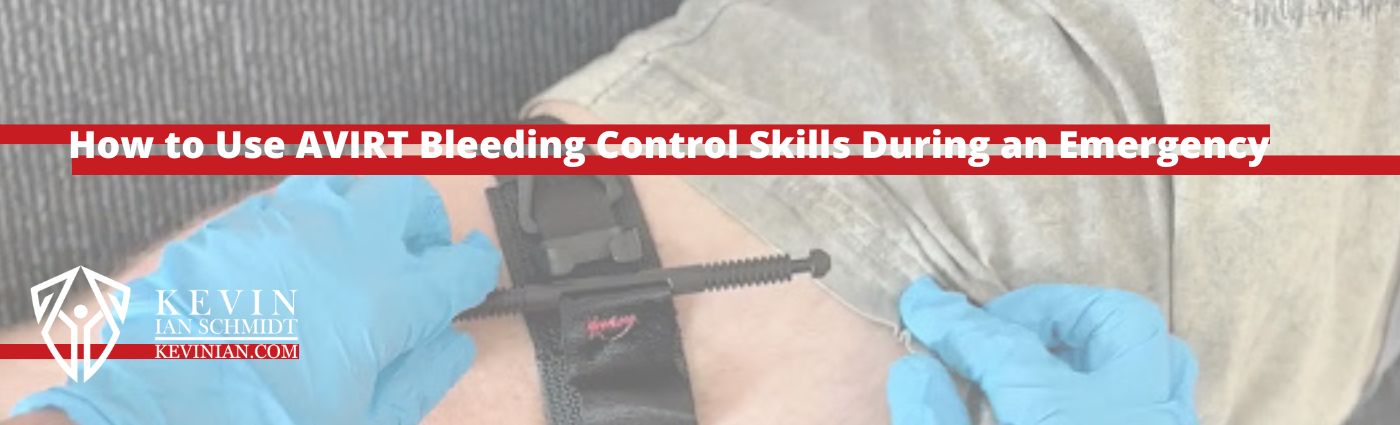
 AVIRT bleeding control skills help employees respond to life-threatening injuries that may occur during workplace violence incidents. While personal safety remains the highest priority during an active violence emergency, severe bleeding often becomes the most urgent medical concern once employees have reached a safer location. Significant blood loss can lead to death within minutes, making rapid recognition and intervention critical. By integrating bleeding control concepts into an active violence response framework, AVIRT helps employees understand when to provide aid, how to support injured coworkers, and how these actions strengthen overall workplace violence preparedness.
AVIRT training helps employees understand how emergency medical response fits within an active violence incident. Rather than replacing professional medical instruction, AVIRT reinforces critical hemorrhage-control concepts and teaches participants how to integrate those actions into an effective active violence response framework. Employees learn how to recognize critical injuries, prioritize personal safety, and provide aid when conditions allow. This combination strengthens overall workplace violence preparedness and improves an organization’s ability to respond during a crisis.
Why Bleeding Control Matters During Workplace Violence Incidents
One of the leading preventable causes of death following traumatic injury is uncontrolled bleeding. During an active violence event, victims may suffer wounds that require immediate intervention long before professional medical responders can access the scene.
Many organizations focus heavily on evacuation procedures, lockdown protocols, and communications planning. While these measures are essential, an effective workplace violence preparedness program should also address what happens after injuries occur. Employees who understand basic bleeding control concepts can play an important role in stabilizing injured coworkers during those critical first minutes.
AVIRT reinforces how emergency medical actions support broader response objectives. Once employees have implemented the principles taught through active violence incident response training, attention may shift toward assisting injured individuals when it is safe to do so. This integrated approach supports a more resilient emergency response capability. Guidance from OSHA Workplace Violence Prevention Resources and the Stop the Bleed Program highlights the importance of rapid intervention during traumatic emergencies.
Recognizing Life-Threatening Bleeding
Effective response begins with recognizing when an injury requires immediate action. During a stressful emergency, employees may be confronted with multiple casualties, chaotic conditions, and limited information. The ability to quickly identify severe bleeding helps improve decision-making and allows aid to be prioritized appropriately.
Life-threatening bleeding often presents with easily recognizable warning signs. Blood that is spurting or pulsing from a wound may indicate serious damage to blood vessels. Large amounts of pooled blood, clothing that becomes rapidly saturated, and deep penetrating wounds can also indicate a critical injury. Victims may begin showing signs of shock, including confusion, weakness, pale skin, or loss of consciousness.
AVIRT reinforces the importance of maintaining situational awareness while assessing injuries. Employees learn that helping a victim should never place additional people at risk. This balance between personal safety and casualty care is a key component of active violence response training and aligns with principles promoted through CISA Active Shooter Preparedness Resources.
Applying Direct Pressure to Control Severe Bleeding
Direct pressure is often the fastest and most effective method for controlling severe bleeding. In many cases, immediate pressure applied directly to the wound can significantly reduce blood loss until additional treatment becomes available.
Employees participating in AVIRT training learn how direct pressure supports emergency trauma response efforts. The goal is to apply firm, continuous pressure directly over the source of bleeding using available resources. Depending on the circumstances, this may include trauma supplies, gauze, clothing, or other suitable materials.
One of the most important principles emphasized during training is maintaining uninterrupted pressure. Repeatedly checking a wound or removing dressings unnecessarily can reduce effectiveness and increase blood loss. Employees are encouraged to remain focused on sustained pressure until professional medical assistance arrives or additional treatment options become available.
The ability to perform this simple but highly effective intervention strengthens workplace emergency preparedness and improves organizational readiness for high-consequence events.
Understanding Wound Packing Techniques
Certain traumatic injuries involve deep wounds where direct pressure alone may not adequately reach the source of bleeding. In these situations, wound packing may support bleeding control efforts and improve overall effectiveness.
Wound packing involves placing gauze or another appropriate material into a wound cavity before applying external pressure. This process helps create compression closer to damaged blood vessels and can assist in slowing severe blood loss. While wound packing requires proper instruction and practice, understanding its purpose helps employees recognize why it may be used during emergency response situations.
AVIRT introduces participants to the role wound packing plays within a comprehensive medical response during workplace violence incidents strategy. Employees gain an understanding of how emergency trauma care supports overall incident response objectives while maintaining focus on safety and situational awareness.
Using Tourniquets During Active Violence Emergencies
Tourniquets have become one of the most effective tools available for controlling catastrophic bleeding involving arms and legs. Modern trauma medicine recognizes tourniquet application as a proven intervention that can significantly improve survival outcomes when severe extremity injuries occur.
AVIRT helps employees understand the role tourniquets play within broader workplace violence preparedness efforts. Participants learn the circumstances that may require tourniquet use and how rapid intervention can help prevent life-threatening blood loss.
Proper placement, adequate tightening, and maintaining the tourniquet until emergency medical professionals assume care are all critical considerations. By understanding how tourniquets function and when they may be needed, employees become more confident in their ability to respond during emergencies.
This practical knowledge supports the objectives of both employee active violence training programs and nationally recognized resources such as the Stop the Bleed Program.
Integrating Bleeding Control Into the AVIRT Response Model
One of the primary strengths of AVIRT is its ability to connect emergency medical actions with active violence decision-making. Bleeding control is not treated as a separate discipline. Instead, it becomes part of a larger response framework that helps employees make informed choices during rapidly evolving situations.
For example, employees who are evacuating may need to provide immediate assistance while moving toward safety. Individuals sheltering in place may perform lifesaving actions while remaining concealed from a threat. Following the resolution of an incident, trained employees may assist casualties until professional responders arrive.
Guidance found within FEMA Emergency Preparedness Guidance similarly emphasizes the importance of coordinated preparedness, decision-making, and response actions during emergencies.
Supporting First Responders After the Incident
Employee involvement often continues after police officers, firefighters, and emergency medical personnel arrive on scene. Effective communication can help responders rapidly assess conditions and prioritize treatment efforts.
AVIRT teaches participants how to relay important information regarding injuries, actions already taken, casualty locations, and any remaining hazards. Accurate communication supports responder operations and helps improve overall response efficiency.
Employees also learn the importance of maintaining scene security, following responder instructions, and avoiding actions that may interfere with emergency operations. Organizations that prepare employees to work effectively alongside responders create a more coordinated approach to crisis management and recovery.
Conclusion
AVIRT bleeding control skills help employees understand how to respond when severe injuries occur during workplace violence incidents. Recognizing life-threatening bleeding, applying direct pressure, understanding wound packing concepts, and recognizing the role of tourniquets all contribute to a stronger emergency response capability.
By integrating medical response principles into an active violence response framework, AVIRT helps organizations move beyond basic awareness and develop practical response capabilities. When combined with a comprehensive workplace violence prevention program and strong emergency planning efforts, these skills help create a safer, more resilient workplace that is better prepared to respond when every second matters.
FAQ
Does AVIRT include bleeding control skills?
AVIRT reinforces bleeding control concepts and teaches employees how hemorrhage control fits within an active violence response framework.
Why is bleeding control important during workplace violence incidents?
Severe bleeding can become life-threatening within minutes, making rapid intervention critical before professional medical personnel arrive.
What injuries require immediate bleeding control?
Injuries involving spurting blood, heavy blood loss, deep wounds, or signs of shock may require immediate attention.
How do tourniquets fit into active violence response?
Tourniquets may be used to control severe bleeding from arms or legs and are often discussed as part of comprehensive emergency response preparedness.
How does AVIRT connect medical response and personal safety?
AVIRT teaches employees how to evaluate threats, prioritize survival, and provide aid when conditions allow, creating a more effective overall response strategy.