
Deprecated: Optional parameter $full declared before required parameter $zip_path is implicitly treated as a required parameter in /home/kevinian/public_html/wp-content/plugins/unyson/framework/extensions/backups/includes/module/tasks/class--fw-ext-backups-module-tasks.php on line 985

Deprecated: Optional parameter $option_id declared before required parameter $value is implicitly treated as a required parameter in /home/kevinian/public_html/wp-content/plugins/unyson/framework/extensions/megamenu/helpers.php on line 193
Safety Archives - Page 17 of 19 - Kevin Ian Schmidt

Category: Safety

  • Strategies Behind Crisis Management

    Strategies Behind Crisis Management

    Ever pondered the connection between crisis management and Humpty Dumpty? Picture Humpty Dumpty as that groundbreaking project, idea, or solution poised to catapult your organization ahead, leaving competitors scrambling to catch up. It could be a global game-changer, enhancing everything in its wake or a revolutionary product/service skyrocketing your stock value.

    Humpty Dumpty sat on a wall
    Humpty Dumpty had a great fall
    All the king’s horses and All the king’s men
    Couldn’t put Humpty Dumpty together again

    Imagine Humpty Dumpty on the wall, symbolizing unparalleled greatness, until an unforeseen event causes a grand-scale fall. The crucial question arises: Did you assemble the best minds beforehand (strategic) or scramble to address the aftermath (tactical)? Few business leaders delve into comprehensive crisis management for their ventures. Yet, history shows that lacking a disaster recovery plan can echo negative repercussions for your business and the global economy for generations.

    Leaders must anticipate crises—events posing threats to life, finances, and company closure. Though crises may seem improbable, recent events like terrorism, natural disasters, cyber-attacks, and corporate fraud debunk this notion. Businesses must adopt a proactive stance, recognizing that crises are inevitable. Adopting a robust risk management strategy involves advanced planning through various stages:

    1. Prevention and Mitigation:
      • Take steps to prevent and minimize potential disaster damage before any risks materialize.
    2. Prepared Response:
      • Develop a robust response strategy, preparing your organization to face unforeseen challenges effectively.
    3. Building Recovery Infrastructure:
      • Establish infrastructure for recovery, ensuring your organization can rebound swiftly after a crisis.
    4. Addressing Damages:
      • Offer an effective response, taking responsibility for any damages incurred during the crisis.
    5. Proper Recovery:
      • Rebuild infrastructures to restore the overall well-being of your organization and its stakeholders.
    6. Learning and Adjustment:
      • Analyze the crisis aftermath, identifying lessons learned and adjusting strategies to prevent recurrence.

    In today’s dynamic business landscape, crises are not a matter of “if” but “when.” Comprehensive crisis management, spanning prevention, preparation, recovery, and ongoing learning, positions your organization to navigate crises with resilience and adaptability.

    Check Out: How to Complete A Risk Assessment

    Below you will find Before the Fall Strategies and After the Fall Strategies your organizations can implement to ensure you are able to put Humpty Dumpty back together again.

    Strategies for Crisis Management before the Fall

    1. Risk forecasting – The field requires more precise prediction techniques.
    2. Communicating risk information – Most people assume that low-probability disasters will not affect them. Enlarging the time horizon for disasters helps your employees better assess how they could be harmed. To help the owners of a production facility with a 25-year life span understand their flood risk, show them data indicating that the chance of a “one-in-100-year flood” happening during that 25 years is greater than “one-in-five”. Presenting the possibility as a “one-in-100 chance” in a single year is not as compelling.
    3. Economic incentives – Cash can motivate people to protect themselves from disaster, for example, cutting the insurance premiums of Mississippians who buy flood protection.
    4. Private-public partnerships – Disasters affect public and private organizations, so they should unite in advance to create mutual emergency strategies and defense plans.
    5. Resiliency and sustainability – Organizations must determine if they will be able to continue to function after a sudden disaster. This question also pertains to nations, notably developing countries burdened with “low-quality structures, poor land use, inadequate emergency response,” and so on.

    Following the Spinning Wheel of Crises exercise with their leadership/project teams before releasing a new product or service: The physical prop for this exercise is a large wheel which spins until it hits a flexible needle, which slows and then stops the wheel’s motion. Once it stops, discuss the possible crises which could occur and what actions need to be in place to prevent such a crises and/or what actions should be taken after such a crises occurs. This tool should be part of every project manager’s toolkit for success. Each segment of the wheel lists a major area in which crises occur:

    1. Economic – This crisis affects the economy
    2. Informational – Information gets lost, by break-in or computer error (for example, Y2K, the millennium bug)
    3. Physical – A crisis affects your buildings, equipment or products
    4. Human resources – Labor issues, fraud or criminal acts generate a crisis
    5. Reputational – Rumors and defamation hurt your organization
    6. Psychopathic acts – Violence, product tampering or criminal behavior strike
    7. Natural disasters – Hurricanes, fires, floods or mudslides breed crises

    To ensure your organization covers all of its bases, combine elements (for example combine items #4 and #7); what plans need to be in place to ensure a quick and maximum recovery?

    Check Out: Tips for Developing A Successful Emergency/Crisis Management Program

    Strategies for Crisis Management After the Fall

    Risk-related decision making involves weighing probabilities and benefits versus losses, creating an accurate statistical analysis and considering alternative actions. Follow these principles for perceiving, assessing and managing the risk of extreme events:

    1. Appreciate the importance of estimating crises – While such calculations are filled with uncertainties, organizations need good information to deal with risk
    2. Recognize the interdependencies associated with the crises – Every risk is connected to outside circumstances. Such linked dependencies create dynamic and evolving uncertainties which can mutate depending on events. Keep your risk forecasts up-to-date
    3. Understand people’s behavioral biases when developing crises management strategies – People must acknowledge their prejudices to make mitigating them possible. For instance, leaders may put off dealing with possible catastrophes due to a stubborn form of denial called not in my term of office (NIMTOF)
    4. Recognize the long-term impact of the crises/disaster – A catastrophe can create enduring change
    5. Recognize transboundary risks by developing global strategies – In disasters, national boundaries are moot. The 2004 tsunami killed people in 11 countries
    6. Overcome inequalities in the distribution and effects of catastrophes -Be ready to assist others in need
    7. Build leadership for averting and responding to disasters before it is needed – Planning and preparing for disasters is far better than waiting until emergencies strike

    Your post-crisis push is to get back to business following Pillars of Business Continuity:

    1. When disaster strikes, you cannot possibly over-communicate with victims.
    2. Be in 24/7 contact with shareholders, employees, customers, contractors and vendors.
    3. Get your off-site IT recovery operations and emergency operations center up and running as soon as possible.
    4. Make sure the staff receives full salaries and benefits. Give the incident commander authority to pay for “equipment, hotel rooms and consulting services” as needed.
    5. Document everything, including damages. Plug in your insurance carrier ASAP.
    6. One and only one spokesperson communicates. Employees should refer all questions to that spokesperson. Avoid policy infractions. Control rumors.
    7. Designate psychological counselors and make them available for anyone affected.
    8. Update stakeholders three times daily concerning all activities and progress.
    9. Stay on top of all suppliers. Make sure they aid in the recovery in a timely manner.
    10. Make sure the disaster is over before you declare it done. Consider “scenario testing” to ensure that things are again as they should be. Plan a “multi-tiered return to normalcy.
    11. Assess event fallout. Establish accountability. Reward anyone who deserves it.

    Now, what about “putting all the pieces together again” – we are living in a time where there is more information available to us in one day than our predecessors had to wait for years to receive. When your organization has trouble identifying solutions to a crises, do not hesitate to put the best brains together (inside and outside of your company and industry) to come up with the solution.

    As an organization, your responsibilities include putting as many Humpty Dumpty’s together through creativity and innovation. And at the same time be proactive in your planning and have a through crises management strategy in place just in case he does fall – being proactive in your planning allows you and your organization to survive through unplanned catastrophes/crises. Wisdom would say that your best creative and innovative ideas will come out of how you handle the crises and what you learned through resolving the issue which caused the crises/disaster.

  • 7 Ways to Build Trust – The Vital Ingredient of Your Safety Culture

    7 Ways to Build Trust – The Vital Ingredient of Your Safety Culture

    Trust forms the foundation for effective communication, employee retention, staff motivation and contribution to discretionary effort and most importantly workplace safety. So how do you maintain and build on the trust you may currently have in your workplace? This is an important question for today’s world of change. We know from our experience that when there is trust within any group, team organization, any change is easy to establish and maintain. It seems that trust underpins almost everything that we try and do in today’s organization.

    We all think we understand about trust because of our own experiences. But it seems to stop there. How do we improve trust levels between people? One of the reasons that this is such a difficult question is that we have always considered trust as a quality by itself. It has been suggested that we should consider it differently. Although a definition of trust could be described as, “a state of readiness for unguarded interaction with someone or something” there is a body of opinion that suggests there are three components that make up trust.

    • The capacity for trusting.
    • The perception of competence.
    • The perception of intentions.

    When you think of trust as being made up of these three components, it is much easier to understand. You can think about the capacity for trusting as your willingness to risk trusting other people. The perception of competence comprises your perception of your ability plus the ability of others to carry out their part of the task. Finally, the perception of intentions is your perception that the actions and words of other people are motivated by desires that serve all parties rather than being just self serving.

    Productive and safety cultures require healthy levels of mutual trust because it is the basis of:

    • Being able to rely on people
    • Working as a team.
    • Reducing risk.
    • Having credible communication.

    In larger organizations you cannot always control the level of trust that you experience, but you can act in seven ways that will create pockets of trust within your immediate work environment to create a safety culture if you carry out following.

    1. You can hire and promote people to leadership positions who are capable of forming positive, trusting interpersonal relationships with their followers.
    2. You can develop the skills of all your staff so that they are competent in interpersonal skills and emotional intelligence.
    3. You can keep all your people truthfully informed. Let them know what’s going on.
    4. You can be consistent under all circumstances. Your predictability will encourage people to trust you.
    5. You can act with integrity and keep all your commitments. The moment you are unable to keep a commitment, you can explain what is happening without delay
    6. You can respect every single staff member by listening and understanding first.
    7. You can give positive reinforcement when it is due.
  • Making Behavior Change Stick Through Effective Change Leadership

    Making Behavior Change Stick Through Effective Change Leadership

    The moment you understand the invisible elements that underpin human behavior, you position yourself to achieve performance results you never thought possible. Through a greatly effective and more universally accepted change leadership approach, you may never have to use command and control again to experience behavior change.

    WHY CHANGE RARELY STICKS

    Whether you want to change your weight, change your relationship or change your company’s bottom line…it all comes down to human behavior.

    You have no chance at sustaining improvements or changes in your business environment without first changing the underlying behavior and thinking patterns of the people involved. If you don’t address the behavior and thinking patters that created the existing situation in the first place, a time will come when you relax your regime of ‘change’ and everything will slip back to the way it was; back to the undesirable state.

    See… the thinking and behavior patterns of your people are attuned to the status quo right now.

    Take the example of a rubber band. To change the shape of the rubber band you could pull it and stretch it to a new shape. You could even hold it extended for a period of time in the shape you desire. But as soon as you let go it just snaps back into place, back into its original state. Your business is like this rubber band – it has an existing state that people are comfortable with. You can force these people into a new pattern of behavior but as soon as you relax your guard (which will happen sooner or later) they will begin to slip back into their old patterns.

    It’s not your fault – suffice to say this is the greatest challenge business leaders face today; getting people to alter their behavior willingly and permanently.

    THE COMMON ERROR IN LEADERSHIP

    The most common error in leadership is to focus on managing people’s actions and use the power of authority to get them to change.

    This outdated ‘Industrial Age’ approach is practiced widely. It is a model that involves managers using authoritarian based command and control methods to coerce staff into greater productivity and higher-level performance.

    Granted, this method of leadership does have its place. However, in today’s social and business environment, if this is the only style employed it will not work! Without addressing the invisible elements of behavior, you will never successfully create lasting change. When an employee’s source of motivation is compliance or obedience, managers must remain vigilant and continually monitor behavior. If they don’t, the desired behavior will not last. Imagine your managers having to monitor employee work continually in an already busy environment. They have less time; more stress; and (in my experience) they also suffer a decline in the quality of their personal life. The change only persists if the managers keep up the monitoring effort.

    Today your employees have the power of CHOICE, so authoritarian based models of influence are not without risk. If that is the only style used, your best staff will simply move on to find a more positive working environment where they will be engaged and challenged, not commanded. All you’re left with is the dead wood.

    One of the most important things I have learnt in the past three decades of work is this:

    All shifts in business results are preceded by a permanent change in behavior. All permanent behavioral changes are preceded by a step change in thinking…a PARADIGM SHIFT!

    This understanding is what has set us apart from most service providers in our industry. We don’t focus our business growth and improvement efforts on KPIs alone or just the technical aspects of behavior. We positively shift those things that drive behavior first.

    And we do it this way!

    Check Out: How Effective Leaders Use Positive Reinforcement For the Greatest Effect

    THE INVISIBLE ELEMENTS OF PERFORMANCE

    The strength and effectiveness of Soarant Vision lies in our intimate knowledge of the 4 INVISIBLE ELEMENTS OF PERFORMANCE and how they can impact business at all levels.

    Let me describe those four elements in this way.

    The quality of the RESULT or OUTCOME you experience is determined by the quality of the actions or behaviors you engage in. Undertake the right behaviors and you create the desired outcome; it’s fundamentally as simple as that.

    What determines the quality of the ACTIONS or BEHAVIORS you engage in?

    Many people will think the answer is skill. I am here to tell you the quality of your actions and behaviors (within your potential performance range) is determined by the quality of your emotional state … yep, that’s right, determined by how you feel.

    What determines whether your employee does or does not do something you want? Quite simply it’s determined by how they feel about it. Emotions drive all behavior; emotional state determines the quality of all behavior we engage in within a given range of performance potential.

    To change the potential, you change the skill. To change the behavior, you must alter the emotional state.

    Now… the final question. What determines the quality of one’s EMOTIONAL STATE?

    I think we all know the answer to this one. The quality of one’s emotional state is determined by the quality of one’s THINKING and BELIEFS.

    TWO AREAS OF IMPACT

    Through understanding how these Invisible Elements of Performance can be shifted, we’ve been able to consistently experience exception results in two areas:

    (1) PERFORMANCE GROWTH

    Engaging people directly so they willingly shift their thinking and beliefs as a foundation to behavior change.

    We put a ton of effort into this aspect of performance in our business execution workshops and leader development seminars. In fact, each seminar we deliver is designed to give people a set of skills and tools, but more importantly to have the right frames of reference and the vital sense of motivation to actually use the skills we teach.

    Always remember… the thinking and motivational aspects of a new skill set can never be left unaddressed if you want people to use those skills.

    (2) LEADER DEVELOPMENT

    Coaching and developing leaders who can utilize the power of influence and persuasion to create permanent change without the stress they are accustomed to.

    It takes time to develop influence and persuasion skills to the point where they can be utilized without thinking in any situation, but it is well worth the effort.

    THREE SCENARIOS OF CHANGE LEADERSHIP

    I’ve found there are 3 scenarios for which leaders must develop these change leadership skills.

    Scenario 1: Informally influencing others around you to engage in some new behavior or respond to your requests. This can be at home or at work, and even upwards, downwards and sideways.

    Scenario 2: Leading a change initiative and guiding people through a roadmap of change that involves a specific sequence of steps from planning through to locking the change in.

    Scenario 3: Formally presenting to audiences in order to influence their behavior and generate some specific response to a request. Audiences can be of any size and both known and unknown to the presenter. This scenario is often a precursor to scenario 2.

  • Some Myths and Truths About Safety Management

    Some Myths and Truths About Safety Management

    I’d like to introduce a few truths and dispel some myths I’ve come to discover in my nearly two decades of working in the safety management arena. Some of these you will know of and agree with and some you won’t know and/or agree with. Either way, the article will have served the purpose of opening up a conversation about safety excellence. Even if the conversation is just going on internally in your mind, it’s a worthwhile exercise to challenge what we believe is true. Because of the limited space for the article, let’s start with some of the most popular myths and truths:

    Myths

    1. Excellence is Possible (and Highly Probable) – Perfection is NOT (and Highly Improbable)

    Although it is highly popular in safety management to get our CEOs to sign off on a Zero goal commitment, it sets us up for inevitable failure. It is a much better plan to strive for excellence in creating safety than to expect perfection. Excellence is possible… perfect isn’t. There is a major problem with Zero Goals… they can be reached without being safe! See below.

    1. Passing a Safety Audit Doesn’t Prove That Your Company is Safe

    Most, if not all, of the popular audit instruments were created by well-meaning groups of people and are not based on any scientific evidence. Now, most of the questions in these audits are likely to be positives to your company outcomes but let’s examine a typical example question.

    “Does your company have a signed Health & Safety Policy?” Arguably a good way to communicate your company’s intentions regarding the management of H&S. Problem is, the score. What is it worth. What are other questions in the audit worth toward your passing mark? Have they been measured in a test using control companies? If the scientific method has not been used to validate the audit… we must admit that we are just guessing. Some very unsafe companies can and do pass audits. That being true, then this audit process is flawed. I’m not suggesting you abandon your audits… I am suggesting you read the results with a clear view of what the audit score may not be telling you about your safety management system.

    Check Out: 10 Essential Components For a Safer Working Environment
    1. Doing Safety TO Your Employees and Contractors Give You Poor to Mediocre Results

    As companies mature and strive for safety excellence, they almost universally realize that the model of “the few controlling the many” plateaus their safety results. Supervisors and managers cannot and should not take the place of full engagement of your employees (and contractors) in their own safety. When talking with those companies who have indeed reached safety excellence, they will all tell you that in their evolution to excellence, there came a point where they had to give it back to their employees. Doing safety with people has been proven to enhance your outcomes. People support what they had a hand in creating.

    Truths

    1. When your employees tell you it’s a safe place to be… it’s safe

    Given the opportunity to honestly provide feedback about a company’s safety process, workers are great sources of information. Usually done anonymously to reduce any feelings of reluctance because of perceived negative consequences, perception surveys are wonderful sources of information. Workers really know what is happening in your company. If it doesn’t match your company’s intentions, then there is a gap that is clearly an improvement opportunity.


    1. Low Injuries Rate Can (and often do) Mean Nothing as Proof of Safety

    Measuring safety by the lack of injuries is just not valid. It is true that very safe companies have very few injuries… but it is also true that some very unsafe companies can and do work long periods of time without any injuries. This makes measuring safety by the lack of injury reports a very poor tool. What can be measured is the act of being safe. See the next point… Safety can be observed and measured.

    1. Safety can be observed and measured

    There’s no need to count injuries or damage to prove the existence of safety in your organization. This can be easily done through discussions and actually observing the work place for behaviors and conditions. We call these observations “leading indicators”. They serve us well as predictors of success (and sometimes failure). Either way, these leading indicators can help us focus on what needs to continue to be done or to be altered if we are unhappy with the observations.

    Check Out: Measuring Workplace Health and Safety Performance

    Well there you have it, a few Myths and Truths about safety management. I hope that this article helps you to reflect a little on what we believe and why we believe those things. After all, what we believe helps to drive our behavior and our behavior is what helps to make ourselves and others safe.

  • Safety Training Is About Behavior Change

    Safety Training Is About Behavior Change

    I remember only too well my first visit to a warehouse for a job interview. The bustle of the forklift traffic was considerable. Drivers were busily unloading and loading pallets of product into the long lines of waiting semi-tractor trucks. Numerous other employees were pulling and pushing hand trucks full of boxed product. This was one busy place. The natural question for me to ask as we continued our tour was, “Are your forklift operators trained?” I received the answer I was hoping for. “Oh yes of course!” My host continued to tell me, “We do it in-house and developed our own program and can’t drive the equipment here until they pass the test!”

    On the surface, this looked and sounded wonderful. The company had recognized the considerable hazard untrained operators could create and had diligently attended to the hazard through a commonly accepted “administrative control” of a recognized hazard: operator training. As we proceeded from the loading dock into the storage area of the warehouse where three-story material racks were filled with palletized product, I was horrified to see that the base legs on nearly every one of the storage racks had been bent. The damage was seriously compromising the safety of the storage rack structure.

    What this employer had failed to do was validate the behavior that they had hoped to accomplish with the forklift operator training. This is a common shortcoming of occupational health and safety related training. We set out the learning objectives and develop and deliver our safety courses.

    On occasion, we even test the participants. Then many of us go on to the next safety issue if since our workers passed the knowledge test and demonstrated a level of competency at the time of the test that we’re now duly diligent and that they will forever more perform the tasks perfectly.

    Really? By now we should all recognize that safe behaviors must be observed and re-enforced through positive feedback and, when necessary, the safe behavior coached.

    How to make training “sticky”

    For safety training to be “sticky” and result in safe behavior, we must take the often-overlooked step in training, which is validation. Case in point, Most Workplace Hazardous Materials Information System (WHMIS) programs I’ve seen are great at imparting the basic information regarding chemical hazards and most are diligent enough to ensure that all our workers can pass a written or verbal test of the many symbols and terms used on labels and Safety Data Sheets (SDS). We fall short of the mark, however, by not actually observing them working safely with chemicals. This is, of course, the behavior we desire, isn’t it? Ask yourself: When do these workers receive their WHMIS cards announcing to any future employer and us that they are WHMIS trained? Usually they get that card after they have passed a test of the symbol knowledge. This is hardly enough to certify that they can work safely with chemical products.

    Check Out: Making Behavior Change Stick Through Effective Change Leadership

    Training and the safe behavior model

    The behavior change model of training requires the following steps to be completed:

    Establish the desired behaviors. Write a performance-based behavioral learning objective that describes the desired behavior; under what conditions the behavior will be demonstrated and finally, the standard that must be achieved to be considered successfully competent. For example:

    “At the end of a six-hour in-class training session the student will be able to perform the following behaviors at the student’s regularly assigned workstation:

    1) Transfer liquid chemicals without over exposure to the chemical;

    2) Read and explain the contents of four randomly selected SDS’c including:

    1. a) What the entry routes are for the chemical;
    2. b) What personal protective equipment (PPE) to wear;
    3. c) Show knowledge of where the PPE is located;
    4. d) Wear the prescribed PPE properly…

    I think you get the idea… We need to describe under what conditions the employee will be demonstrating the behavior or competency.

    Finally, we must demand that the student demonstrate the new behavior to a determined level of competency. Once a student has demonstrated their ability to meet the criteria, we must then continue to support the new behavior with consistent observation and feedback.

    Mager’s theory of behavioral objectives

    There are many theories and approaches to writing learning objectives, however I find the Robert F. Mager model the easiest to teach. I recommend that you read his book, “Preparing Instructional Objectives: A Critical Tool in the Development of Effective Instruction”.

    Once the training needs are analyzed and the learning goals of the program are determined by establishing the desired future behavior, follow the steps of Mager’s approach.

    Learning goals need to be broken into a subset of smaller tasks or learning objectives. By definition, a behavioral objective must have three components: behavior, condition and standard.

    To learn more about Mager’s theory of behavioral objectives, check out this post at Convergence Training.

    Validation is due diligence

    Here’s where the proverbial rubber hits the road. Is the trained employee behaving to the trained standard? How would you know? By testing at the end of the course? Certainly, that would be an indication that the employee could do the behavior. The due diligence question that the courts will want to know is “Were they exhibiting the safe behavior and how did you know?”

  • Hazard Communication Plan Explained

    Hazard Communication Plan Explained

    More than 30 million workers in the United States are potentially exposed to one or more chemical hazards. There are an estimated 650,000 existing hazardous chemical products, and hundreds of new ones are being introduced annually. This poses a serious problem for exposed workers and their employers.

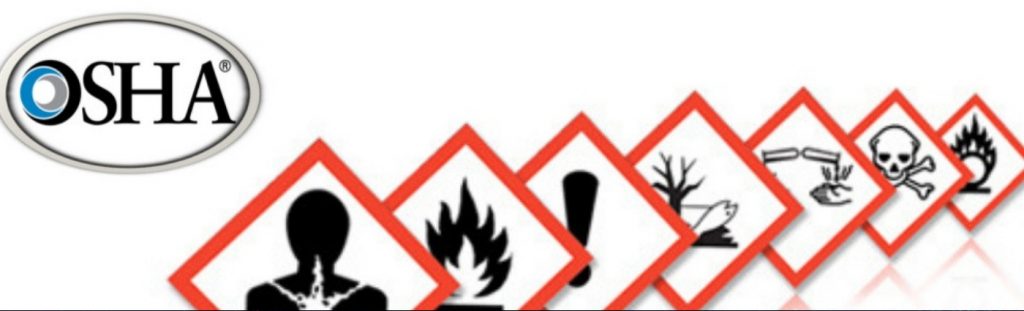
    The Hazard Communication Standard (HCS) is now aligned with the Globally Harmonized System of Classification and Labeling of Chemicals (GHS). This update to the Hazard Communication Standard (HCS) will provide a common and coherent approach to classifying chemicals and communicating hazard information on labels and safety data sheets. This update will also help reduce trade barriers and result in productivity improvements for American businesses that regularly handle, store, and use hazardous chemicals while providing cost savings for American businesses that periodically update safety data sheets and labels for chemicals covered under the hazard communication standard.

    OSHA.gov

    How does the OSHA Hazard Communication Standard effect your business? Well first let’s take a look at what OSHA sets as some standards.

    The OSHA Hazard Communication Standard (HCS) – 29 CFR 1910.1200 provides workers exposed to hazardous chemicals with the identities and hazards of those materials,

    From OSHA.gov

    Hazard Communication Standard

    spray-bottleIn order to ensure chemical safety in the workplace, information about the identities and hazards of the chemicals must be available and understandable to workers. OSHA’s Hazard Communication Standard (HCS) requires the development and dissemination of such information:

    • All employers with hazardous chemicals in their workplaces must have labels and safety data sheets for their exposed workers, and train them to handle the chemicals appropriately.

    So you read this and say to yourself, “I don’t deal in hazardous chemicals”. But if you have things like cleaning chemicals, that employees or the public can handle, then you need to comply with OSHA’s Hazard Communication Standard. Employees need to be familiar with OSHA’s hazard communication standards to help save lives and avoid OSHA citations.


    Purpose of the HAZCOM standard

    The purpose of the HCS 2012 is to make sure that:

    1. the hazards of all chemicals produced or imported are classified, and
    2. information about the classified hazards is transmitted to employers and employees.

    Classifying the potential hazards of chemicals, and communicating information concerning hazards and appropriate protective measures to employees, may include:

    • hazard communication plandeveloping and maintaining a written hazard communication program
    • listing hazardous chemicals present
    • labeling containers of chemicals in the workplace
    • labeling containers of chemicals being shipped to other workplaces
    • preparing and distributing SDSs to employees and downstream employers
    • developing and implementing employee training programs

    The HCS 2012 applies to any chemical which is known to be present in the workplace in such a manner that employees may be exposed under normal conditions of use or in a foreseeable emergency.

    Foreseeable emergency” means any potential occurrence such as, but not limited to, equipment failure, rupture of containers, or failure of control equipment which could result in an uncontrolled release of a hazardous chemical into the workplace.

    The phrase “known to be present” is important. If a hazardous chemical is known to be present by the chemical manufacturer or the employer, it is covered by the standard.

    Check Out: How to Read an SDS Sheet

    This includes not using generic, unlabeled cleaners, or buying cleaners in bulk and putting them in unlabeled bottles. Using a marker on the bottle isn’t enough either.

    “Hazardous chemical” means any chemical which is classified as a physical hazard or a health hazard, a simple asphyxiant, combustible dust, pyrophoric gas, or hazard not otherwise classified.

    This includes chemicals to which employees may be exposed during normal operations or in a foreseeable emergency. This means that even though an employer was not responsible for the manufacture of the hazardous chemical, the employer has the responsibility for transmitting information about the hazardous chemical to his or her employees.


    OSHA Definitions of Chemical Hazards

    Do not think that the chemicals which apply to the rule are only those in liquid, gas or particulate form. But, the standard’s definition of “chemical” is much broader than that commonly used. According to the HCS, chemicals that apply may exist in one of many forms:

    • Dusts – are finely divided particles. Example – wood dust.
    • Fumes – are even smaller particles usually formed when solid metal is heated and vaporized, and then condenses as tiny particles.
    • Fibers – are similar to dusts but are of an elongated shape. Examples – asbestos and fiberglass.
    • Mists – are liquid droplets that have been sprayed into the atmosphere.
    • Vapors – are gases formed when liquid evaporates.
    • Gases – are substances that are normally airborne at room temperature. A vapor is the gaseous phase of a substance which is a normally a liquid or solid at room temperature.
    • Solids – such as metal, treated wood, plastic.
    • Liquids – the most common form in the workplace.

    Chemical Effects

    The effects chemicals have on the various organs of the human body depend on several important factors:

    1. The form of the chemical: Is the chemical a solid, liquid, or gas?
    2. The route of entry, or how the chemical contacts the body: is it ingested, inhaled, absorbed or injected?
    3. The dose, or amount, the body receives: How much chemical makes its way into the body?
    4. The toxicity: How poisonous is the chemical?

    Routes of Entry

    Another important task when assessing the workplace for chemical hazards is to determine the route(s) of entry the chemicals may take. If we know the route(s) of entry, we can then determine appropriate engineering, administrative, and PPE controls to eliminate or reduce the exposure. The four common routes of entry are:

    1. Ingestion: Do we eat or drink it?
    2. Inhalation: Do we breathe it in? This is the most common route of entry.
    3. Absorption: Does it pass through the skin, eyes or other membranes?
    4. Injection: Does it enter through a puncture or cut?
    Check Out: Hazard Communication Standard Training for Supervisors

    Employees, such as office workers or bank tellers who encounter hazardous chemicals only in non-routine, isolated instances are not covered. For example, an office worker who occasionally changes the toner in a copying machine would not be covered by the standard. However, an employee who operates a copying machine as part of her/his work duties would be covered by the HAZCOM Standard.

    Do you have all SDS sheets and a chemical listing of chemicals onsite, that is available to all employees, not locked in a drawer in a back office. Online access is acceptable, as long as all employees know how to get it and have access to a computer.

    Employer Responsibilities

    SDSs may be kept at the primary workplace facility or online, as long as the employer can ensure employees have quick access to the information.

    • Employers must obtain a SDS from the chemical manufacturer or importer as soon as possible if the SDS is not provided with a shipment that has been labeled as a hazardous chemical.
    • Employers must maintain SDSs in their workplace and must ensure that they are readily accessible during each work shift to employees when they are in their work area(s).
    • Electronic access and other alternatives to maintaining paper copies of the SDS are permitted as long as no barriers to immediate employee access in each workplace are created by such options. Make sure employees know how to quickly access SDS information that is stored on computers or online.
    • Where employees must travel between workplaces during a workshift, i.e., their work is carried out at more than one geographical location, the SDSs may be kept at the primary workplace facility. In this situation, the employer must ensure that employees can immediately obtain the required information in an emergency.
    • Employees who work at more than one site during the work shift must be able to obtain SDS information immediately (within seconds) in an emergency.
    • SDSs may be kept at the primary workplace facility, as long as the employer has a representative available at all times to ensure ready access (within a few minutes) to this information. This is the only situation in which an employer is allowed to transmit hazard information via voice communication. The employer must address in the written hazard communication plan how SDS information will be conveyed to remote worksites.
    • SDSs may be kept in any form, including operating procedures, and may be designed to cover groups of hazardous chemicals in a work area where it may be more appropriate to address the hazards of a process rather than individual hazardous chemicals.

    Have you conducted employee awareness training on how to read an SDS sheet?


    Download and view a sample HAZCOM policy below; that can be adapted for your needs, but remember a small business owner might find a full and proper Hazard Communication Plan to be overwhelming to fully and properly design.


  • First Aid Training and Kit Requirements

    First Aid Training and Kit Requirements

    Does your business have a first aid kit? Do you have people in your business trained to render first aid?  What are the requirements for first aid kits, first aid training, and such according to OSHA?

    1910.151(b)

    In the absence of an infirmary, clinic, or hospital in near proximity to the workplace which is used for the treatment of all injured employees, a person or persons shall be adequately trained to render first aid. Adequate first aid supplies shall be readily available.


    Near Proximity for First Aid Responders

    first-aidSo first let’s talk about what OSHA means by “near proximity”, because that can be vague. In a workplace, where employees may be exposed to hazards, like machinery or powered equipment, a response time over 3-4 minutes in considered “near proximity”, and for an office setting, “near proximity” is deemed 15 minutes. This comes from the OSHA Letter of Interpretation from March 2007.

    So how does this effect your workplace if you are a retail establishment? Do you have any machines employees use, baggers, cardboard compactor, steamer, or anything else? Then you should probably hold your business to the standard for a 3-4 minute response time. This holds true for a restaurant, where an employee could burn themselves severely.

    Now, factor in that the national average response time for an ambulance in most urban environments is 8 minutes or MORE, and you soon realize, you would be outside of the OSHA standards for near proximity and should have trained first aid responders on site.


    First Aid Kit Requirements

    first aid kitHaving a first aid kit in the workplace is just a good safety precaution, even if you feel you aren’t required to under OSHA guidelines. It can become confusing though, because the OSHA Regulation, simply says “Adequate first aid supplies shall be readily available.” What is deemed adequate? What supplies must you have?

    In an OSHA Letter of Interpretation from April 2002, Richard E. Fairfax, Director: Directorate of [Enforcement] Programs for OSHA talks of how the ANSI standard Z308.1-1998 would be deemed adequate for most small workplaces, but you should also have suitable supplies for the risks in your workplace.

    ANSI standard Z308.1-1998 supplies

    ANSI/SEA Z308.1 2009 – Minimum Requirements for Workplace First Aid Kits and Supplies Basic Kit – minimum contents.


    ITEM MINIMUM QUANTITY
    Absorbent compress, 32 sq. in. 1
    Adhesive bandages, 1 in. x 3 in. 16
    Adhesive tape, 3/8 in. x 2.5 yd. total 1
    Antibiotic treatment,0.14 fl. Oz. (0.9 g) 6
    Antiseptic,0.14 fl. Oz. (0.5 g) application 10
    Burn treatment, 1/32 oz. (0.9 g) application 6
    First-aid guide 1
    Medical exam gloves 2 pairs
    Sterile pads, 3 in. x 3 in. 4
    Triangular bandage, 40 in. x 40 in. 56 in. 1


    first-aid-kit-unstockedThis amount would be sufficient for a small workplace, with 2-3 employees, and then increase the amount of supplies as you increase employees, and also consider having one basic kit of bandages in the front of the business and a larger more comprehensive amount of first aid supplies in the back office.

    If you plan on keeping your medical cabinet locked up in a back office, consider this OSHA Letter of Interpretation from January 2007, which says it is ok to lock the medicine cabinet up, but it must be accessible during an emergency. So, be careful with locking it up, because if it isn’t accessible when needed, it can result in a worse injury, and potentially trigger an OSHA inspection.

    It is also important to note that if you have a first aid kit, and it is poorly maintained, OSHA could find you in Willful noncompliance, which could dramatically increase your fines.


    First Aid Training and Bloodborne Pathogens Requirements

    bodily-fluid-cleanup-kitIf you determine your business is required to provide first aid training, know that OSHA has requirements for providing Bloodborne Pathogen training along with it, as clarified by this OSHA Letter of Interpretation from January 2007.

    So what does that mean for your business? Well, OSHA’s Bloodborne Pathogen Standard has specific rules as they relate to training, recordkeeping, and even offering Hepatitis B vaccinations.

    Check Out: BloodBorne Pathogen Exposure Control Plan

    One aspect of the Bloodborne Pathogen requirement that is often overlooked is a policy, written specifically that addresses workplace exposure risks, along with proper handling and cleanup of blood and other bodily fluids.

    You also need the proper bloodborne pathogen cleanup kit, I you have bloodborne pathogen training for employees. Because like earlier, partially implementing a program or plan, could show OSHA you were aware of your requirements but didn’t follow through with them, and increase a citation to a Willful, and lead to much higher fines.


  • Fire Prevention Plan – Overview

    Fire Prevention Plan – Overview

    The purpose of a Fire Prevention Plan is to eliminate the causes of fire, prevent loss of life and property by fire, and to comply with the Occupational Safety and Health Administration’s (OSHA) standard on fire prevention, 29 CFR 1910.39. It provides employees with information and guidelines that will assist them in recognizing, reporting, and controlling fire hazards.

    A quality Fire Prevention Plan describes the fuel sources (hazardous or other materials) on site that could initiate or contribute both to the spread of a fire, as well as the building systems, such as fixed fire extinguishing systems and alarm systems, in place to control the ignition or spread of a fire.


    OSHA Guidelines for a Fire Prevention Plan

    A fire prevention plan must be in writing, be kept in the workplace, and be made available to employees for review. However, an employer with 10 or fewer employees may communicate the plan orally to employees. [29 CFR 1910.39(b)]

    At a minimum, your fire prevention plan must include:

    • A list of all major fire hazards, proper handling and storage procedures for hazardous materials, potential ignition sources and their control, and the type of fire protection equipment necessary to control each major hazard. [29 CFR 1910.39(c)(1)]
    • Procedures to control accumulations of flammable and combustible waste materials. [29 CFR 1910.39(c)(2)]
    • Procedures for regular maintenance of safeguards installed on heat-producing equipment to prevent the accidental ignition of combustible materials. [29 CFR 1910.39(c)(3)]
    • The name or job title of employees responsible for maintaining equipment to prevent or control sources of ignition or fires. [29 CFR 1910.39(c)(4)]
    • The name or job title of employees responsible for the control of fuel source hazards. [29 CFR 1910.39(c)(5)]
    • An employer must inform employees upon initial assignment to a job of the fire hazards to which they are exposed. An employer must also review with each employee those parts of the fire prevention plan necessary for self-protection. [29 CFR 1910.39(d)]
    Learn how to conduct a Fire Risk Assessment to best formulate your Fire Prevention Plan

    A Fire Prevention Plan serves to reduce the risk of fires at your workplace in the following ways:

    1. The Fire Prevention Plan identifies materials that are potential fire hazards and their proper handling and storage procedures.
    2. It distinguishes potential ignition sources and the proper control procedures of those materials.
    3. The plan describes fire protection equipment and/or systems used to control fire hazards.
    4. It identifies persons responsible for maintaining the equipment and systems installed to prevent or control ignition of fires.
    5. The Fire Prevention Plan identifies persons responsible for the control and accumulation of flammable or combustible material.
    6. It describes good housekeeping procedures necessary to insure the control of accumulated flammable and combustible waste material and residues to avoid a fire emergency.
    7. The plan provides training to employees with regard to fire hazards to which they may be exposed.


  • Fire Risk Assessment

    Fire Risk Assessment

    Prior to fighting any fire with a portable fire extinguisher you must perform a fire risk assessment that evaluates the fire size, the fire fighters evacuation path, and the atmosphere in the vicinity of the fire.

    Check Out: Fire Extinguisher Basics
    Risk Assessment Question Characteristics of incipient stage fires or fires that can be extinguished with portable fire extinguishers Characteristics of fires that

    SHOULD NOT be fought with a portable fire extinguisher (beyond incipient stage) – evacuate immediately

    Is the fire too big? The fire is limited to the original material ignited, it is contained (such as in a waste basket) and has not spread to other materials. The flames are no higher than the firefighter’s head. The fire involves flammable solvents, has spread over more than 60 square feet, is partially hidden behind a wall or ceiling, or cannot be reached from a standing position.
    Is the air safe to breathe? The fire has not depleted the oxygen in the room and is producing only small quantities of toxic gases. No respiratory protection equipment is required. Due to smoke and products of combustion, the fire cannot be fought without respiratory protection.
    Is the environment too hot or smoky? Heat is being generated, but the room temperature is only slightly increased. Smoke may be accumulating on the

    ceiling, but visibility is good. No special personal protective equipment is required.

    The radiated heat is easily felt on exposed skin making it difficult to approach within 10-15 feet of the fire (or the effective range of the extinguisher). One must crawl on the floor due to heat or smoke. Smoke is quickly filling the room, decreasing visibility.
    Is there a safe evacuation path? There is a clear evacuation path that is behind you as you fight the fire. The fire is not contained, and fire, heat, or smoke may block the evacuation path.
  • Emergency Exits: OSHA Standards

    Emergency Exits: OSHA Standards

    Emergency Exits are in every business, they are even required by most fire codes, but they are often an overlooked and worse even neglected integral part of a successful safety program. They should even be addressed in your Emergency Action Plan, but if you don’t address them correctly, it can result in OSHA fines, or worse an injured employee or customer.

    OSHA standards for emergency exits require employers to do the following:

    ■ Keep exit routes free of explosive or highly flammable furnishings and other decorations.
    Keep flammable chairs, and decorations, or even flammable clothing displays back from emergency exits.
    ■ Arrange exit routes so employees will not have to travel toward a high-hazard area unless the path of travel is effectively shielded from the high-hazard area.
    emergency exitsCheck Out: Fire Risk Assessments

    If an exit route is through a backroom, between 2 giant stacks of cardboard boxes, or similar material, it probably won’t meet this standard.

    ■ Ensure that exit routes are unobstructed such as by materials, equipment, locked doors, or dead-end corridors.
    Not only do exit routes and doors have to have a clear path of egress, you also need to ensure that the path doesn’t require weaving around items, or working through a maze of rooms.
    ■ Ensure that safeguards designed to protect employees during an emergency remain in good working order.
    Do you have sprinklers? They need to be inspected regularly. Do you have emergency lights? They need to be inspected regularly. If you have things to protect people, they need to function, test them regularly don’t just trust that they will work during an emergency.
    ■ Provide lighting for exit routes adequate for employees with normal vision.
    blocked-fire-exitIf the lights in your business go out, do you have emergency lighting and is it adequate? You can actually purchase emergency lights that won’t be obtrusive, and blend in with your decor.
    ■ Keep exit route doors free of decorations or signs that obscure the visibility of exit route doors
    We all love to have our business looking great on the inside, decorations, mentions of upcoming events, and such, but keep these things off emergency exit doors, keep the doors easily identifiable for there purpose.
    ■ Post signs along the exit access indicating the direction of travel to the nearest exit and exit discharge if that direction is not immediately apparent. Also, the line-of-sight to an exit sign must be clearly visible at all times.
    Easiest way to check this, is stand in the middle of your business, can you clearly see an emergency exit? If not, you need to add a sign pointing towards the nearest exit. Now move around your business, do you see exits from all the different vantage points? Don’t forget store rooms, back offices and such.
    ■ Mark doors or passages along an exit access that could be mistaken for an exit “Not an Exit” or with a sign identifying its use (such as “Closet”).
    Is your emergency exit the last door on the left, down a hallway? All other doors need to be marked as “not an exit”.
    ■ Install “EXIT” signs in plainly legible letters.
    blocked emergency exitNo fancy script, no plain arrows, simple to read block letters.
    ■ Renew fire-retardant paints or solutions often enough to maintain their fire-retardant properties.
    Did you have a wall painted with fire retardant paint to aid in an evacuation? Did you know even the manufacturer recommends refreshing it every couple of years? Don’t forget little maintenance like that.
    ■ Maintain exit routes during construction, repairs, or alterations.
    Doing some renovations? Keep your exit routes clear, keep the signs visible, or offer secondary routes.
    ■ Provide an emergency alarm system to alert employees, unless employees can promptly see or smell a fire or other hazard in time to provide adequate warning to them.
    Honestly, the baseline standard here, if your business is larger that a single room, you need some form of emergency alarm system.

    I hope you understand these guidelines, use them as a baseline for your own emergency exits and exit routes. Check out your own business, or contact me and I will happily discuss setting up an audit, or just answer some of your questions.


Deprecated: Hook setted_transient is deprecated since version 6.8.0! Use set_transient instead. in /home/kevinian/public_html/wp-includes/functions.php on line 6170