 There is no national data available on the number of workers killed each year by contact with uncontrolled hazardous energy. However, during the period between 1982 through 1997, the National Institute for Occupational Health (NIOSH) investigated 1281 fatal accidents as a part of its Fatality Assessment and Control Evaluation Program, (FACE). The FACE program was only active in 20 states during that period so the statistics represent just a portion of American workers. The findings, for this portion of workers, showed that 152 fatalities involved the installation, maintenance, service or repair tasks on or near machines, equipment, processes, or systems.
OSHA estimates that 29 CFR 1910.147 protects approximately 39 million workers and adhering to its requirements can eliminate nearly 2% of all workplace deaths in areas affected by this rule.
Basic steps of the control of hazardous energy procedure:
– Preparation for shutdown
– Notifying all employees
– Equipment shutdown
– Isolation from hazardous energy
– Render all stored or residual energy safe.
– Locking & Tagging the machines
– Performing maintenance or service activity
– Verification (observation, visual inspection & equipment testing)
– Removing Locks & Tags
– Notifying all employees to resume work
Testing or Repositioning of the Machines During Special Circumstances
OSHA allows the temporary removal of locks or tags only under special circumstances such as when:
- The machines need to be tested or repositioned.
If power is needed to test the machines or reposition the machines, equipment or components, re-energization must follow a specific procedure.
- When outside contractors are working on-site.
Both the onsite and off-site employers must communicate about their respective lockout and tagout procedures. Each must be certain that its personnel understand and comply with all restrictions and/or prohibitions of the other employer’s energy control program.
- When servicing or maintenance is carried out by a group rather than one person.
The crew or group must follow a procedure that affords all employees a level of protection that is equal to that provided by the lockout/tagout device.
- When there are shift or personnel changes during servicing or maintenance.
Either the energy isolating devices must remain under continuous control or the on-coming shift must verify the de-energization and lockout/tagout devices are in place on machinery and equipment.
Removal of Tags or Lockout Devices for Testing or Positioning of the Machines
When lockout devices or tags are removed and energy is restored to the machines or equipment for testing or repositioning, authorized employees must take these actions:
- Check the work area to ensure that all non-essential items are removed and the machines are intact and capable of operation.
- Check the area around the machinery to be certain all employees have been removed or are in safe positions.
- Locks and tags are to be removed only by the employees who attached them when possible.
- Notify all employees before restarting machinery.
- Energize and reposition machinery.
- De-energize all systems; isolate the machinery from the energy source.
- Reapply lockout or tagout devices as specified.
Removal of Locks and Tags
- Inspect the work area to ensure that non-essential items have been removed and that machine or equipment components are intact and operate properly.
- Check the area around the machine or equipment to ensure that all employees have been safely positioned or removed from the area.
- Make sure that locks or tags are removed only by employees who attached them. When this is not possible, the device may be removed under the direction of the employer, provided he adheres to the specific procedures in the standard.
- Notify affected employees after removing locks or tags and before starting equipment or machines.
These policies must be closely followed – with no deviation. Inconsistency creates confusion and can lead to injury and even death.
Check out this process for removing abandoned lockout locks
What is Lock Out – Tag out (LOTO)
LOTO is a safety procedure followed to declare the industrial machines safe. The machines shall be incapable of starting again without the prior knowledge of all the people involved.
Lock Out – It means locking the concerned device and keeping it away from any power-inducing source. The machine should not be capable of restarting again without warning.
This involves locking devices like:
• Circuit breakers
• Cable lockouts
• Valves & springs
• Disconnect switches
• Key combinations
• Pneumatic lockouts
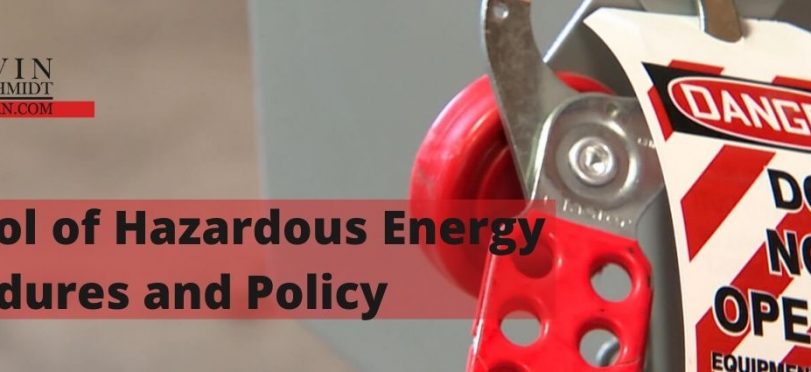
Tag Out – This refers to a process of labeling the device as powerless. The attached pointer includes: why the tag is there, time of application of the tag, & name of the authorized person.
All LOTO devices must have some standard functions and should meet the following requirements.
• Identifying the authorized person
• High durability level
• A “Do not open, start” warning
• Uniform in color, size, print, shape and format
• Devices should resist early removal, except using specific tools like bolt cutters, wire cutters etc.
• Non-releasable tags
Do you need more components of a lockout/tagout program?
There are three important definitions that are to be kept in mind while following these steps:
System – This refers to the machinery, process and equipment.
Authorized Employee – This refers to the person who’s qualified to carry out the lockout process.
Affected Employee – These employees work in the machines. They are not qualified to carry out the procedure like workers, housekeeping staff, ground staff etc.
Make sure you have the proper training for your employees:
Basic Lockout/tagout Training
Expanded Lockout Tagout Training
There are several responsible people for the job to take place smoothly.
The managers are responsible for drafting & updating. Monitoring the job is their primary aim.
The supervisors are responsible for ensuring that everyone follows protocols.
The employees are responsible for assisting and reporting issues if/when they occur.
View the Controlling Hazardous Energy Program below
Download the Controlling Hazardous Energy Program below